
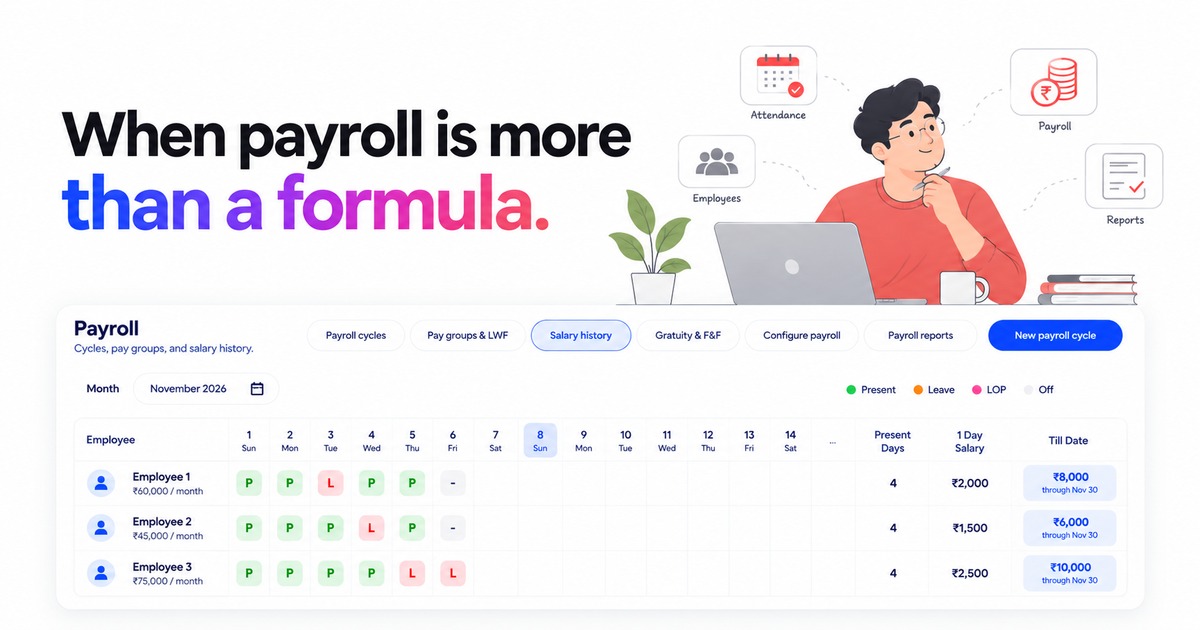
When Payroll Is More Than a Formula
How we translated a client-specific leave, roster and overtime policy into a practical HRMS workflow.

The situation: HR policies are rarely one-size-fits-all
When you build an HRMS, the difficult part is not always adding another module. It is understanding what happens when a real organisation's policy does not fit a standard workflow.
Different organisations have different rules for monthly rosters, paid leave, loss of pay (LOP), overtime and payroll. A rule that looks simple in a policy document can quickly become complicated when it has to work consistently for every employee and every pay cycle.
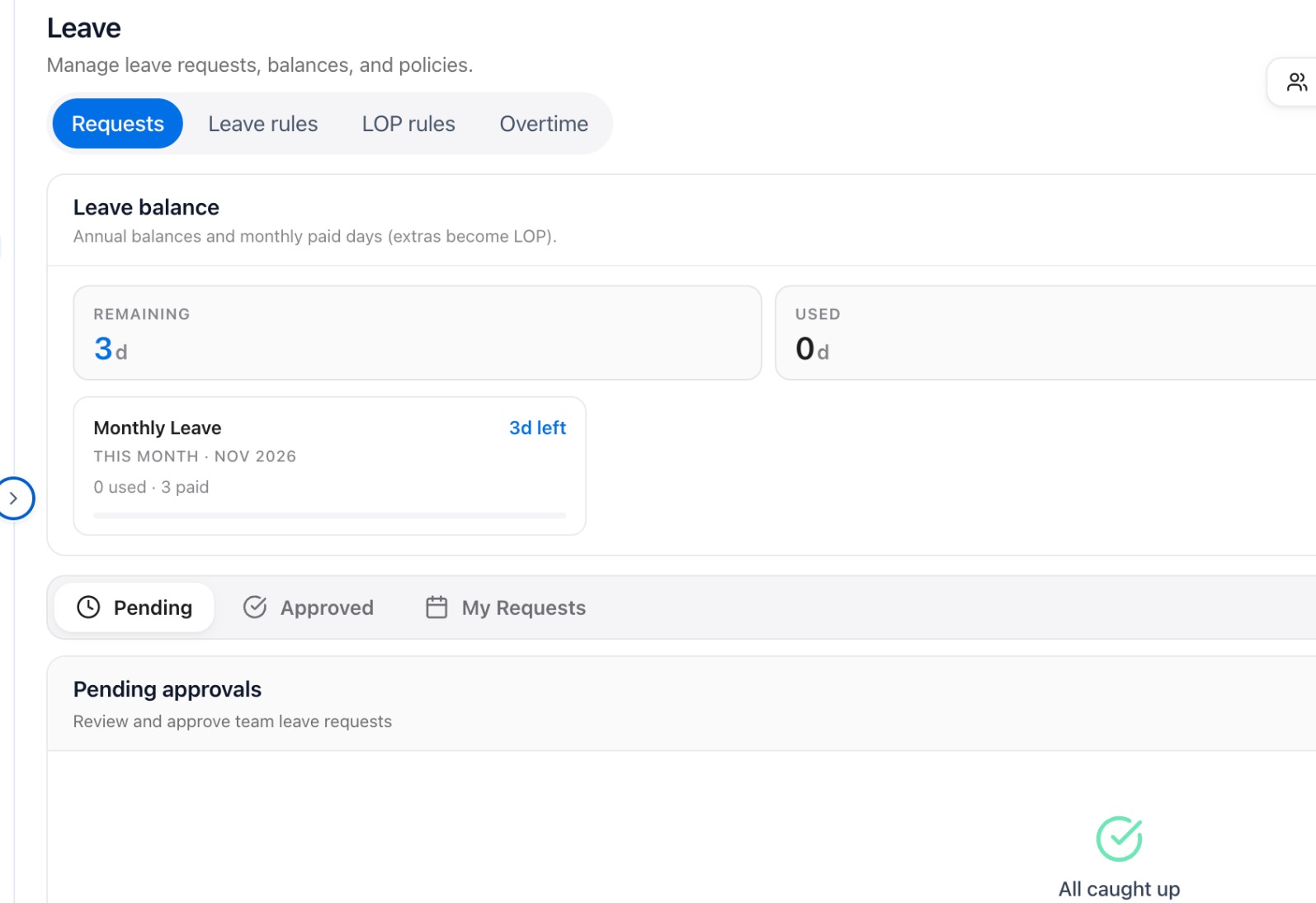
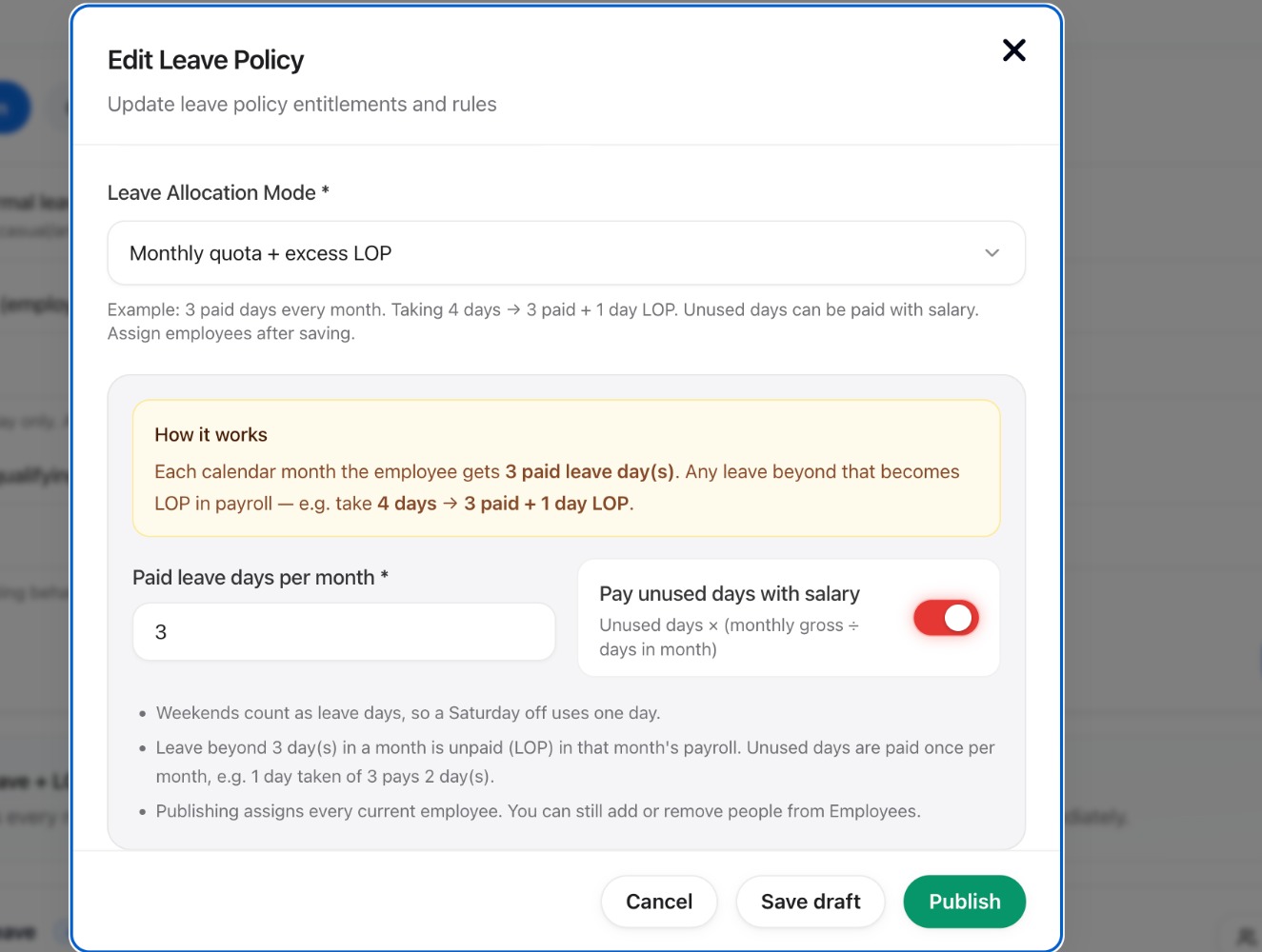
We recently worked through one such requirement. The client needed a monthly roster with three designated paid leave days, with the option to configure a different quota when business requirements change.
The unused leave days also had a specific payroll treatment: they were to be paid as additional earnings, based on the agreed policy.
The task: one policy, several outcomes
The rule had to work across a few distinct scenarios:
- If an employee used
- none of the three monthly leave days, the three unused days would be paid as additional earnings.
- If an employee used
- all three days, they would receive their normal monthly pay.
- If an employee used
- five days, the two days beyond the monthly allowance would be treated as
- LOP and deducted according to the configured policy.
- If an employee came in and completed their assigned shift on a designated leave day, that actual working day needed to be recorded and considered separately for eligible additional payment.
That last point mattered. The client did not want to rely on assumptions or manual notes. They wanted a clear way to see who actually worked on those days.
The action: connect the policy to the day-to-day workflow
We broke the requirement into connected parts rather than treating it as a one-off payroll adjustment.
First, we configured a monthly leave quota that could be changed to match the organisation's requirements. The leave policy also made the treatment of unused days and excess leave explicit.
Next, we connected the roster and attendance records to the payroll calculation. This helped distinguish between a day taken as leave, a day that exceeded the allowance, and a designated leave day on which the employee actually worked.
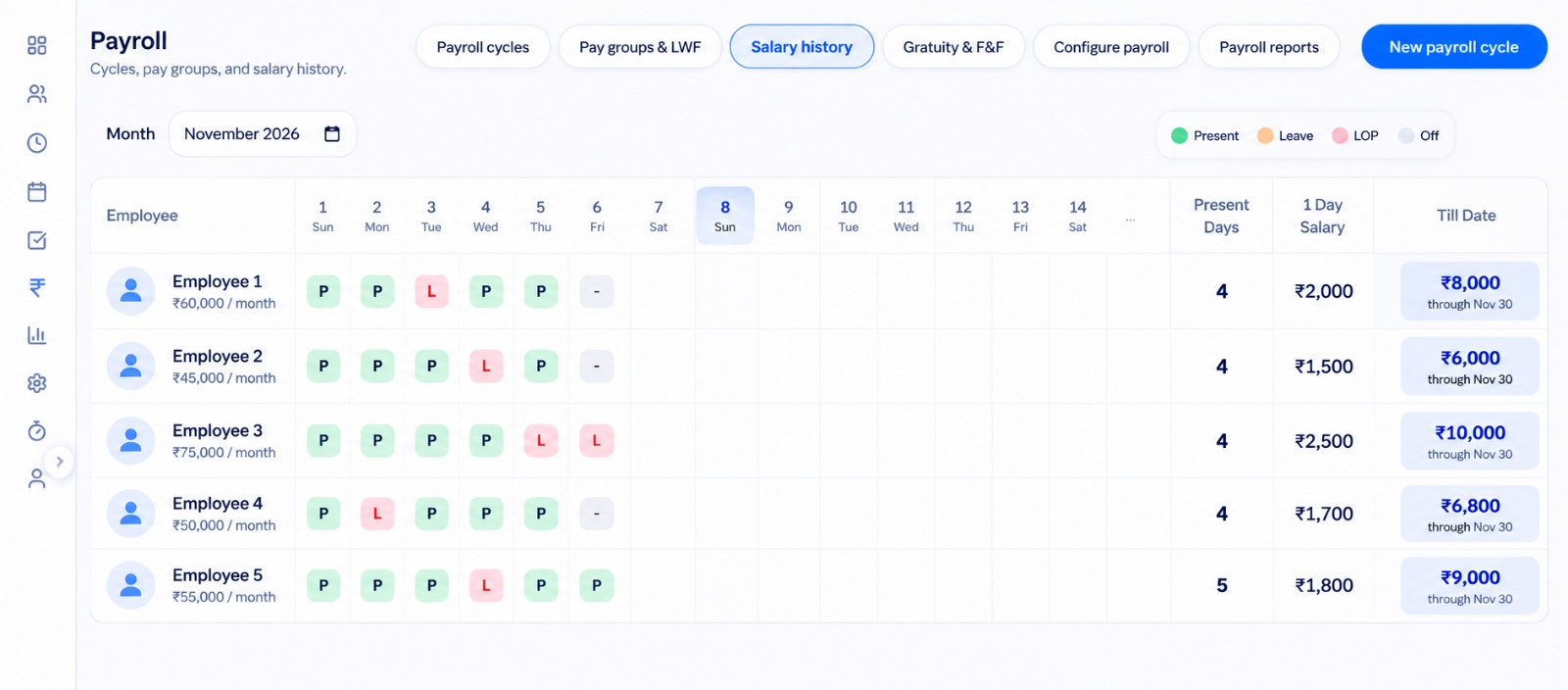
We also provided a separate payroll view to make the day-wise calculation easier to review. Instead of hiding the result inside a total, the screen gives the team a way to inspect the employee-level calculation.
The result: less manual interpretation, more clarity
We delivered the workflow within a short turnaround and aligned it with the client's stated requirements. The client is now using it in their day-to-day process.
For us, the important result was not simply that the calculation worked. It was that the policy could be followed through the system—from monthly leave configuration and roster planning to attendance review and payroll.
The takeaway
This is the part of HRMS development that often goes unseen. Behind a simple “process payroll” button are policy decisions, employee scenarios, exceptions and calculations that need to agree with one another.
The lesson we took from this project is straightforward: good HRMS software should adapt to an organisation's approved policies, while keeping the rules clear, traceable and manageable.
That is how we approach complex HR operations—not by adding complexity for the user, but by doing the hard work behind the scenes.